Filtering Working Papers

23-02

Tobias Bauckloh, Juris Dobrick, André Höck, Sebastian Utz, Marcus Wagner

In Partnership for the Goals? The Level of Agreement Between SDG Ratings

published in: Journal of Economic Behavior and Organization, Vol. 217, 2024, 664-678.
DOI: 10.1016/j.jebo.2023.11.014

This study analyzes the level of agreement of Sustainable Development Goal (SDG) ratings across five different rating providers. It documents a low level of agreement that is particularly pronounced for companies from the Energy, Healthcare, and Basic Materials sector. Moreover, the low level of agreement is mostly driven by some individual SDGs. When analyzing implications, we find different return characteristics and risk factor exposures of portfolios sorted according to SDG ratings of different rating providers. Overall, our analyses show that current SDG ratings fail to provide a clear signal of companies’ contribution to the SDGs which can have severe consequences for sustainability transitions and their financing.

23-03

Tobias Bauckloh, Maurice Dumrose, André Höck, Christian Klein

ESG Criteria and the Credit Risk of Corporate Bond Portfolios

published in: Journal of Asset Management, Vol. 24, 2023, 572-580.
DOI: 10.1057/s41260-023-00337-w

Demand for sustainable fixed-income investment solutions is surging but there is hardly research on the impact of sustainability on the risk characteristics of fixed-income portfolios. This study examines the impact of sustainability on the credit risk exposure of U.S. corporate bond portfolios between 2013 and 2020 by analyzing the returns of sustainable and non-sustainable portfolios using two different asset pricing models and environmental, social, and governance (ESG) ratings from different providers. Controlling for a set of portfolio characteristics, our results show that sustainable portfolios are significantly less exposed to credit risk than their non-sustainable peer portfolios. This finding implies that considering ESG criteria in portfolio management is a suitable means to systematically manage credit risk. Being the first study to investigate the relationship between sustainability and credit risk on portfolio level, this study contributes to the understanding of the effects of ESG criteria in portfolio management and provides academics and investment professionals with valuable insights.
23-04

Vikas Agarwal, Brad Barber, Si Cheng, Allaudeen Hameed, Harshini Shanker, Ayako Yasuda

Do Investors Overvalue Startups? Evidence from the Junior Stakes of Mutual Funds

We show that mutual funds report their junior stakes in startups at 43% higher valuation than model fair values that consider multi-tier capital structures of startups. The latest-issued and most senior security is worth 48% per share than junior securities held by mutual funds, implying that mutual funds mark junior securities close to par with the senior securities. Our findings are robust to model assumptions. Identical valuations reported for dual holdings of senior and junior securities imply 37% discrepancy in implied values of the firm. Overvaluation is lower for fund families with longer experience in private startup investments, and higher for junior securities purchased in secondary transactions. Overvaluation declines after down rounds (new financing rounds with purchase prices lower than previous rounds) and near IPOs. The results are consistent with mutual funds neglecting the probability of negative outcomes in which junior securities are paid less than senior securities and overweighting successful exits where all securities convert to common equity and are valued equally.
23-05

Vikas Agarwal, Wei Jiang, Yuchen Luo, Hong Zou

The Real Effect of Sociopolitical Racial Animus: Mutual Fund Manager Performance During the AAPI Hate

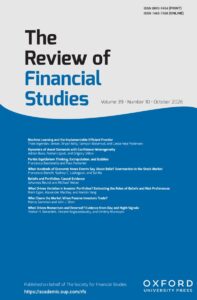
appears in: Review of Financial Studies.
DOI: 10.1093/rfs/hhag052

Using the recent AAPI Hate around 2020-2021 as an exogenous shock, we show that sociopolitical racial animus impairs the performance of mutual funds managed by at least one Asian female manager, the most targeted group by the Hate-induced violence. The decline in performance is greater in states with higher levels of anti-Asian animus, when the portfolio is more actively managed, has an aggressive investment objective, or when the Asian female manager plays a more influential role in fund management. The poor fund performance is not attributed to fund investors’ redemption, low managerial quality, increased childcare burden, concerns for the pandemic situation of family members in home countries, or solely workplace discrimination. Placebo tests show that the same performance decline is absent among funds managed by non-Asian-looking minority and index funds. Taken together, the evidence is consistent with perceived vulnerability to the AAPI Hate crimes inducing distraction and stress and leading to impaired performance. Corroborating this view, we only find some limited evidence in a subset of Asian male managers that they suffer from a performance decline when they are based in states with higher levels of anti-Asian animus. Our study contributes to the scarce evidence on the impact of sociopolitical racial animus on productivity and explores racial animus beyond the workplace and marketplace.
23-06

Julian Dörries, Olaf Korn, Gabriel J. Power

How Should the Long-term Investor Harvest Variance Risk Premiums?

published in: Journal of Portfolio Management, Vol. 50, 2024, 122-142.
DOI: 10.3905/jpm.2024.1.600

Derivatives strategies that aim to earn variance risk premiums are exposed to sharp price declines during market crises, calling into question their suitability for the longterm investor. Our paper defines, analyzes, and proposes potential solutions to three problems (payoff, leverage and finite maturity) linked to designing suitable variancebased investment strategies. We conduct an empirical study of such strategies for the S&P 500 index options market and find strong effects of certain design elements on risk and return. Overall, our results show that variance strategies can be attractive to the long-term investor if properly designed.
23-07

Alan Guoming Huang, Russ Wermers, Jinming Xue

“Buy the Rumor, Sell the News”: Liquidity Provision by Bond Funds Following Corporate News Events

Using a comprehensive database of corporate news, we find that bond funds trade against the direction of news sentiment. The trading against news phenomenon is concentrated in funds selling on positive news and in the post-financial crisis period when dealer liquidity provision is constrained. Funds in so doing exhibit higher alphas, and a potential source of such alphas is bond price reversals post news events. Our findings highlight that bond mutual funds represent a significant liquidity provider in the corporate bond market and play a complementary role to dealers in corporate news events.
23-08

Alexander Braun, Julia Braun, Florian Weigert

Extreme Weather Risk and the Cross-Section of Stock Returns

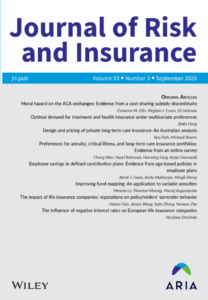
published in: Journal of Risk and Insurance, Vol. 93, 2025, 163-198.
DOI: 10.1111/jori.70022

We provide evidence for an extreme weather risk premium in the cross-section of stock returns. In the period from 1995 to 2019, domestic U.S. stocks with the most negative sensitivity to economy-wide storm losses earned excess returns of 6.5% p.a. over stocks with the most positive sensitivity. This premium can neither be explained by asset pricing risk factors nor by firm characteristics. It prevails for geographically exposed as well as historically affected firms from a broad range of industries. Our results reveal a novel link between climate risk and firm value.
24-01

Gjergji Cici, Philipp Schuster, Franziska Weishaupt

Once a Trader, Always a Trader: The Role of Traders in Fund Management

Mutual fund families are increasingly assigning traders to manage corporate bond mutual funds. Using this setting to study the role of traders in investment management, we document that trader managers identify and exploit short-term trading opportunities at lower transaction costs. These skills are particularly valuable during periods of market stress. Moreover, trader managers exhibit sophisticated risk management behavior: They reduce credit risk during periods of market stress and take more maturity risk during periods of large interest rate fluctuations, while holding portfolios with greater convexity. The combination of these skills produces relative outperformance during periods of large interest rate fluctuations.
24-02

Andrew Y. Chen, Alejandro Lopez-Lira, Tom Zimmermann

Does Peer-Reviewed Research Help Predict Stock Returns?

Mining 29,000 accounting ratios for t-statistics over 2.0 leads to cross-sectional return predictability similar to the peer review process. For both methods, about 50% of predictability remains after the original sample periods. Predictors supported by peer-reviewed risk explanations or equilibrium models underperform other predictors post-sample, suggesting peer review systematically mislabels mispricing as risk, though only 20% of predictors are labelled as risk. Data mining generates other features of peer review including the rise in returns as original sample periods end and the speed of post-sample decay. It also uncovers themes like investment, issuance, and accruals—decades before they are published.
24-03

Travis Dyer, Gerrit Köchling, Peter Limbach

Traditional Investment Research and Social Networks: Evidence from Facebook Connections

We show that investors acquire more public information about firms to which they are more socially proximate. On average, a standard deviation increase in the Social Connectedness Index (Bailey et al., 2018) between a firm’s headquarter county and a searcher county is associated with 30% more EDGAR filing downloads from the searcher county. The effect of social proximity on traditional investment research is distinct from the effect of geographic proximity. We find similar results studying headquarter relocations, investor-level data, and EDGAR downloads from European regions, for which physical distance should be irrelevant. Social proximity matters more during times of high market-wide uncertainty and for firms with weaker information environments. Finally, information gathered by socially proximate investors predicts short-term earnings and stock returns, but also heightened volatility. Collectively, the evidence indicates that social networks mitigate informational frictions and foster information acquisition in financial markets.