Our Working Papers provide insight into the research at the CFR. Discover current findings and contributions on various research topics.
05-11
Silke Ber, Alexander Kempf, Stefan Ruenzi
Determinanten der Mittelzuflüsse bei deutschen Aktienfonds
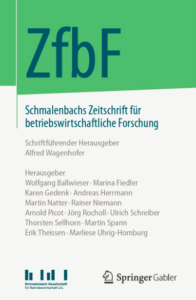
published in: zfbf - Schmalenbachs Zeitschrift für betriebswirtschaftliche Forschung, Vol. 59, 2007, 35-60.
This paper provides the first empirical analysis of the determinants of flows into German equity funds. For the period from 1991 to 2003, we find several interesting differences from the US market. First, we confirm the positive convex relationship between a fund’s past performance and its net flows documented in the literature, although this relationship is less pronounced in Germany than in the United States. We also show that the characteristics of the fund management company to which a fund belongs have a substantial influence on its flows. In particular, we provide the first evidence of a cannibalisation effect within fund families, especially among funds offered in the same market segment. Our findings have important implications for fund managers’ risk-taking and the product policies of fund management companies.